
The Agent Tax: Why Your AI Stack Costs More Than Your Engineering Team
By Lukco
Overview
Overview
You replaced three contractors with an AI agent and your AWS bill went up 40%. This is the conversation nobody's having about AI-native operations. The discourse focuses on model costs—Claude vs GPT-4, context window pricing, whether to fine-tune. Meanwhile, teams building production agent systems are discovering a different cost structure entirely: the infrastructure tax that comes from making agents work inside systems designed for humans. The past week of infrastructure announcements—Atlassian's MCP integration, n8n's containerized execution environments, Google's context-aware tooling—aren't just feature releases. They're acknowledgments that the execution layer for agents is fundamentally different from traditional automation, and that difference has a price. ## The Tax You Didn't Budget For When you build an agent to handle customer support tickets, you're not just paying for API calls. You're paying for: **State persistence.** Your agent needs to remember context across conversations, sessions, and handoffs. That's not a feature request—it's a baseline requirement. But unlike a human who keeps context in their head, your agent needs a database, caching layer, and retrieval system. Every interaction writes state. Every context switch reads it. At scale, this isn't negligible. **Error handling infrastructure.** Humans recover from errors gracefully. They read between the lines, ask clarifying questions, and route around problems. Agents need explicit error handling for every possible failure mode: API timeouts, malformed responses, rate limits, permission errors, missing context. You're not writing exception handlers—you're building a parallel nervous system that can detect and route around dozens of failure states per interaction. **Context assembly.** The agent needs to know what it's allowed to do, what data it can access, what the current state of the ticket is, what the customer's history looks like, and what your company's policies are. Assembling this context isn't free. You're running queries, making API calls, retrieving documents, and synthesizing information before the agent even starts its primary task. This is the hidden tax of making agents context-aware enough to be useful. **Execution environments.** If your agent needs to run code, access tools, or interact with external systems, it needs somewhere to do that safely. Containerized execution, sandboxing, resource limits, cleanup—this is infrastructure you provision and pay for even when the agent isn't actively working. None of this shows up in your model provider's pricing calculator. ## Why Traditional Automation Costs Don't Apply You might be thinking: we already have automation. We already pay for infrastructure. What's different? Traditional automation runs on rails. You define the path, handle the edge cases upfront, and the system executes deterministically. The cost model is predictable: X executions cost Y compute. You can optimize the path, cache aggressively, and batch operations. Agents don't run on rails. Every interaction is a branching path of decisions, tool calls, and context retrievals. You can't cache aggressively because the context is always different. You can't batch because the agent needs to respond in real-time. You can't optimize the path because you don't control it—the model does. This creates a cost structure that scales differently: - **Human automation:** Cost scales with volume of work - **Agent automation:** Cost scales with complexity of decisions × volume of work That complexity multiplier is the tax. ## The MCP Trap Model Context Protocol was supposed to solve this. Give agents a standard way to access context, and suddenly the infrastructure tax goes away, right? Not quite. MCP standardizes the interface, but it doesn't eliminate the underlying cost. Your agent still needs to retrieve context, assemble it, and make it available. MCP just changes where that work happens. Instead of building custom integrations, you're now running MCP servers, managing protocol overhead, and dealing with a new layer of abstraction. The recent wave of MCP integrations from Atlassian, n8n, and others is validating the protocol, but it's also revealing the infrastructure requirement. These aren't lightweight plugins—they're full execution environments with their own resource requirements, monitoring needs, and operational overhead. Adding MCP to your stack doesn't reduce the tax. It standardizes how you pay it. ## What Actually Drives Cost If you're running agents in production, three factors determine whether your infrastructure tax is manageable or unsustainable: **1. Context retrieval frequency** Every time your agent needs to make a decision, it retrieves context. The more decisions, the more retrievals. The more complex the context (CRM data, documentation, past interactions, policy documents), the more expensive each retrieval. You can optimize this, but there's a floor. Agents need context to be useful. Reduce context too much and you get hallucinations, errors, and escalations—which create their own costs. **2. Tool call overhead** Agents that can actually do things—update records, send emails, trigger workflows—are more valuable than chatbots. But every tool call is an API request, a state update, a potential failure point. The more capable your agent, the more infrastructure it needs to exercise that capability safely. This is why the containerized execution environments matter. You're not just running code—you're isolating it, monitoring it, cleaning up after it, and handling failures gracefully. That's not free. **3. Error recovery complexity** When an agent hits an error, it needs to recover without human intervention. That means retry logic, fallback paths, graceful degradation, and state rollback. Every error path you handle is infrastructure you maintain. The alternative—escalating to humans—eliminates the point of having an agent. ## The Real Calculation Here's the math nobody wants to do: **Cost of human:** Salary + benefits + overhead **Cost of agent:** Model API + infrastructure + error handling + context management + monitoring + on-call for when it breaks For simple, high-volume tasks, agents win easily. For complex, context-heavy work, the infrastructure tax can exceed the cost of the human—especially at low volumes. The break-even point isn't about model pricing. It's about how much infrastructure you need to make the agent reliable enough to trust. ## What This Means for Your Stack If you're building AI-native operations, you need to budget for the execution layer from day one: - **State management isn't optional.** Plan for databases, caching, and retrieval systems that scale with agent activity, not just user activity. - **Error handling is infrastructure.** You're building a parallel system to catch, route, and recover from failures. Budget for it. - **Context assembly has a cost.** Every decision your agent makes requires context. Know what that context costs to retrieve and assemble. - **Tool calls are expensive.** The more your agent can do, the more infrastructure it needs to do it safely. The infrastructure layer that's shipping this week—MCP integrations, containerized environments, context-aware tooling—isn't making agents cheaper. It's making them production-ready, which is different. Production-ready means reliable. Reliable means infrastructure. Infrastructure means cost. The question isn't whether you'll pay the tax. It's whether you budgeted for it. --- If you're running agents in production and the infrastructure costs are scaling faster than you expected, you're not doing it wrong. You're discovering the execution layer tax that nobody talks about because most teams haven't shipped yet. The buildout happening right now—from Atlassian, n8n, Google, and others—is the market acknowledging that this layer exists and needs to be purpose-built. At Lukco, we help teams architect agent systems that account for this tax upfront, not after the AWS bill arrives. Because the cost of agents isn't in the API calls. It's in making them work reliably inside the systems you already have.
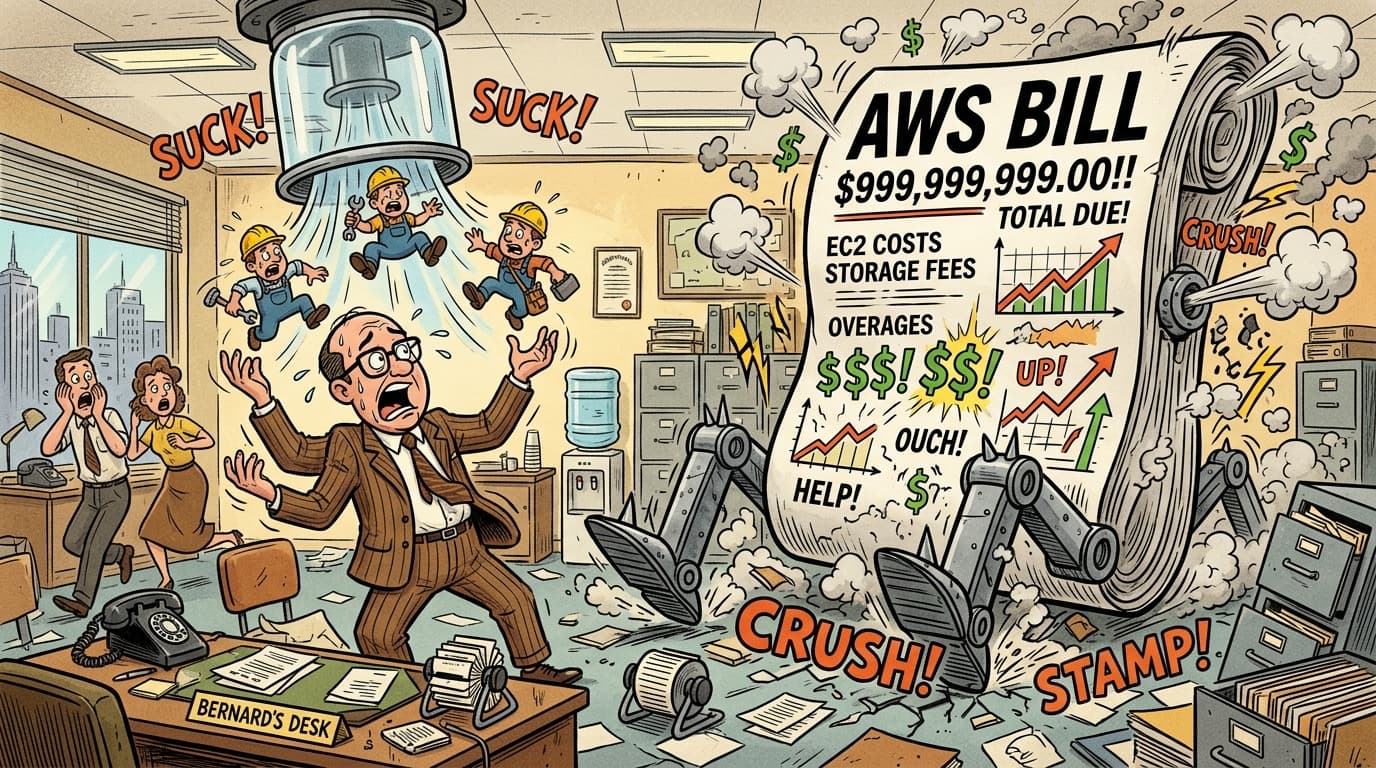
You replaced three contractors with an AI agent and your AWS bill went up 40%.
This is the conversation nobody's having about AI-native operations. The discourse focuses on model costs—Claude vs GPT-4, context window pricing, whether to fine-tune. Meanwhile, teams building production agent systems are discovering a different cost structure entirely: the infrastructure tax that comes from making agents work inside systems designed for humans.
The past week of infrastructure announcements—Atlassian's MCP integration, n8n's containerized execution environments, Google's context-aware tooling—aren't just feature releases. They're acknowledgments that the execution layer for agents is fundamentally different from traditional automation, and that difference has a price.
The Tax You Didn't Budget For
When you build an agent to handle customer support tickets, you're not just paying for API calls. You're paying for:
State persistence. Your agent needs to remember context across conversations, sessions, and handoffs. That's not a feature request—it's a baseline requirement. But unlike a human who keeps context in their head, your agent needs a database, caching layer, and retrieval system. Every interaction writes state. Every context switch reads it. At scale, this isn't negligible.
Error handling infrastructure. Humans recover from errors gracefully. They read between the lines, ask clarifying questions, and route around problems. Agents need explicit error handling for every possible failure mode: API timeouts, malformed responses, rate limits, permission errors, missing context. You're not writing exception handlers—you're building a parallel nervous system that can detect and route around dozens of failure states per interaction.
Context assembly. The agent needs to know what it's allowed to do, what data it can access, what the current state of the ticket is, what the customer's history looks like, and what your company's policies are. Assembling this context isn't free. You're running queries, making API calls, retrieving documents, and synthesizing information before the agent even starts its primary task. This is the hidden tax of making agents context-aware enough to be useful.
Execution environments. If your agent needs to run code, access tools, or interact with external systems, it needs somewhere to do that safely. Containerized execution, sandboxing, resource limits, cleanup—this is infrastructure you provision and pay for even when the agent isn't actively working.
None of this shows up in your model provider's pricing calculator.
Why Traditional Automation Costs Don't Apply
You might be thinking: we already have automation. We already pay for infrastructure. What's different?
Traditional automation runs on rails. You define the path, handle the edge cases upfront, and the system executes deterministically. The cost model is predictable: X executions cost Y compute. You can optimize the path, cache aggressively, and batch operations.
Agents don't run on rails. Every interaction is a branching path of decisions, tool calls, and context retrievals. You can't cache aggressively because the context is always different. You can't batch because the agent needs to respond in real-time. You can't optimize the path because you don't control it—the model does.
This creates a cost structure that scales differently:
- Human automation: Cost scales with volume of work
- Agent automation: Cost scales with complexity of decisions × volume of work
That complexity multiplier is the tax.
The MCP Trap
Model Context Protocol was supposed to solve this. Give agents a standard way to access context, and suddenly the infrastructure tax goes away, right?
Not quite.
MCP standardizes the interface, but it doesn't eliminate the underlying cost. Your agent still needs to retrieve context, assemble it, and make it available. MCP just changes where that work happens. Instead of building custom integrations, you're now running MCP servers, managing protocol overhead, and dealing with a new layer of abstraction.
The recent wave of MCP integrations from Atlassian, n8n, and others is validating the protocol, but it's also revealing the infrastructure requirement. These aren't lightweight plugins—they're full execution environments with their own resource requirements, monitoring needs, and operational overhead.
Adding MCP to your stack doesn't reduce the tax. It standardizes how you pay it.
What Actually Drives Cost
If you're running agents in production, three factors determine whether your infrastructure tax is manageable or unsustainable:
1. Context retrieval frequency
Every time your agent needs to make a decision, it retrieves context. The more decisions, the more retrievals. The more complex the context (CRM data, documentation, past interactions, policy documents), the more expensive each retrieval.
You can optimize this, but there's a floor. Agents need context to be useful. Reduce context too much and you get hallucinations, errors, and escalations—which create their own costs.
2. Tool call overhead
Agents that can actually do things—update records, send emails, trigger workflows—are more valuable than chatbots. But every tool call is an API request, a state update, a potential failure point. The more capable your agent, the more infrastructure it needs to exercise that capability safely.
This is why the containerized execution environments matter. You're not just running code—you're isolating it, monitoring it, cleaning up after it, and handling failures gracefully. That's not free.
3. Error recovery complexity
When an agent hits an error, it needs to recover without human intervention. That means retry logic, fallback paths, graceful degradation, and state rollback. Every error path you handle is infrastructure you maintain.
The alternative—escalating to humans—eliminates the point of having an agent.
The Real Calculation
Here's the math nobody wants to do:
Cost of human: Salary + benefits + overhead
Cost of agent: Model API + infrastructure + error handling + context management + monitoring + on-call for when it breaks
For simple, high-volume tasks, agents win easily. For complex, context-heavy work, the infrastructure tax can exceed the cost of the human—especially at low volumes.
The break-even point isn't about model pricing. It's about how much infrastructure you need to make the agent reliable enough to trust.
What This Means for Your Stack
If you're building AI-native operations, you need to budget for the execution layer from day one:
- State management isn't optional. Plan for databases, caching, and retrieval systems that scale with agent activity, not just user activity.
- Error handling is infrastructure. You're building a parallel system to catch, route, and recover from failures. Budget for it.
- Context assembly has a cost. Every decision your agent makes requires context. Know what that context costs to retrieve and assemble.
- Tool calls are expensive. The more your agent can do, the more infrastructure it needs to do it safely.
The infrastructure layer that's shipping this week—MCP integrations, containerized environments, context-aware tooling—isn't making agents cheaper. It's making them production-ready, which is different.
Production-ready means reliable. Reliable means infrastructure. Infrastructure means cost.
The question isn't whether you'll pay the tax. It's whether you budgeted for it.
If you're running agents in production and the infrastructure costs are scaling faster than you expected, you're not doing it wrong. You're discovering the execution layer tax that nobody talks about because most teams haven't shipped yet. The buildout happening right now—from Atlassian, n8n, Google, and others—is the market acknowledging that this layer exists and needs to be purpose-built.
At Lukco, we help teams architect agent systems that account for this tax upfront, not after the AWS bill arrives. Because the cost of agents isn't in the API calls. It's in making them work reliably inside the systems you already have.