
The AI Agent Paradox: Why Your Automation Stack Is Getting More Complex, Not Less
By Lukco
Overview
Overview
Your AI agent just failed silently at 3 AM because two tools returned the same field name with different data types, and nobody caught it until a customer complained. This isn't a story about bad engineering. It's what happens when you replace a monolithic CRM with six specialized agents, each calling different APIs, each maintaining its own state, each with its own idea of what "contact\_id" means. The promise of AI agents is real: instead of wrestling with Salesforce's 47-step workflow builder, you write natural language instructions and the agent figures it out. Instead of paying for enterprise seats you don't use, you compose lightweight tools that do exactly what you need. The economics are compelling. The developer experience is better. The flexibility is unmatched. But there's a complexity tax nobody talks about. ## The Coordination Problem Monolithic SaaS platforms are bloated and expensive, but they solve one problem extremely well: everything lives in the same database. When your sales rep updates a deal stage in Salesforce, the reporting dashboard, the email sequences, and the commission calculator all see the same truth immediately. Agent-based architectures trade that guaranteed consistency for flexibility. Now you have: - A lead enrichment agent pulling from Clearbit - A qualification agent scoring based on your ICP criteria - A CRM sync agent writing to your database - A notification agent posting to Slack - An analytics agent aggregating metrics Each agent is simple. The system is not. The failure modes multiply. The enrichment agent runs but returns partial data. The qualification agent times out and retries with stale context. The CRM sync agent writes successfully but the notification agent never fires because it was listening for a different event shape. Your Slack channel stays quiet. Your pipeline report shows a lead that doesn't exist. Nobody notices until Friday. This isn't hypothetical. This is the pattern we see in every multi-agent system that scales past the demo phase. ## State Is the Hard Part The dirtiest secret in AI automation: most agent failures aren't LLM hallucinations. They're state management bugs. When you build with agents, you're building a distributed system. Distributed systems have two hard problems: consensus and state synchronization. Your agents need to agree on what happened, in what order, and what that means for the next action. Consider a customer support workflow: 1. User submits ticket via email 2. Triage agent categorizes it (bug, feature request, billing) 3. Routing agent assigns to the right team 4. Context agent pulls user history and recent interactions 5. Response agent drafts a reply 6. Approval agent checks for policy violations 7. Send agent delivers the response and updates ticket status What happens when the context agent is slow and the response agent starts drafting without full history? What happens when the user sends a follow-up email while the approval agent is still processing? What happens when two agents try to update the ticket status simultaneously? You need: - Event ordering guarantees - Idempotency keys - Conflict resolution strategies - Retry logic with exponential backoff - Dead letter queues for poison messages - Observable state transitions None of this is AI-specific. It's distributed systems engineering. But most teams building AI agents are optimizing prompts, not designing state machines. ## The Observability Gap When your Zapier automation breaks, you get an email. When your AI agent fails, you often get nothing. Agents fail gracefully. They hallucinate plausible-sounding outputs. They skip steps without throwing errors. They make reasonable-seeming decisions based on incomplete information. The system keeps running. The data slowly drifts from reality. Traditional monitoring doesn't catch this. Your healthcheck endpoint returns 200. Your error rate is zero. Your latency is fine. But your agent just confidently told a customer their refund was processed when it wasn't, because the payment API returned a 202 (accepted) instead of a 200 (completed) and the agent interpreted "accepted" as "done." You need: - Semantic monitoring (did the agent do what it was supposed to do, not just run without errors) - Assertion-based testing (explicit checks for expected outcomes, not just happy-path coverage) - Human-in-the-loop checkpoints for high-stakes decisions - Audit trails that show not just what happened, but why the agent decided to do it This is expensive. Not in compute costs—in engineering time and ongoing maintenance. ## The Mitigation Strategy None of this means you shouldn't build with agents. It means you should build with your eyes open. The teams that succeed with agent-based architectures share three patterns: **1. They start with clear contracts between agents.** Every agent has a defined input schema, output schema, and failure mode. When Agent A hands off to Agent B, both sides know exactly what to expect. This sounds obvious. Most teams skip it because "the LLM will figure it out." The LLM will not figure it out. **2. They instrument everything.** Not just logs. Structured events that capture: what the agent was asked to do, what context it had, what decision it made, what action it took, and what the outcome was. When something breaks (and it will), you need to replay the agent's reasoning, not just read a stack trace. **3. They limit agent autonomy to match their observability.** If you can't monitor it, don't automate it. High-stakes workflows get human checkpoints. Low-stakes workflows get full automation. The line between high and low stakes is defined by impact (what breaks if this fails) and detectability (how quickly you'll notice). The studio model matters here. You don't need a full-time SRE to instrument your agent architecture. You need someone who's built enough of these systems to know where the failure modes hide, who can set up the right observability from day one, and who can move on once the foundation is solid. ## The Real Complexity Budget Every architecture has a complexity budget. Monolithic SaaS spends it on vendor lock-in, feature bloat, and per-seat pricing that doesn't scale with value. Agent-based architectures spend it on coordination, state management, and observability. The question isn't which is simpler. The question is which complexity you'd rather manage. For teams building differentiated workflows—where the competitive advantage comes from doing things differently, not just doing things—the agent model wins. You get flexibility, composability, and economics that actually make sense. But only if you treat it like the distributed system it is. Most teams don't. They treat agents like better API wrappers. They optimize prompts when they should be designing state machines. They celebrate the demo and ignore the failure modes. Then they hit scale and realize their automation stack is more fragile than the manual process it replaced. The fix isn't to go back to monolithic SaaS. It's to build agent architectures with the same rigor you'd apply to any distributed system: clear contracts, comprehensive instrumentation, and deliberate constraints on autonomy. This is engineering work, not prompt work. If your AI automation strategy doesn't include a plan for state management and observability, you're not building automation. You're building technical debt with a chat interface.
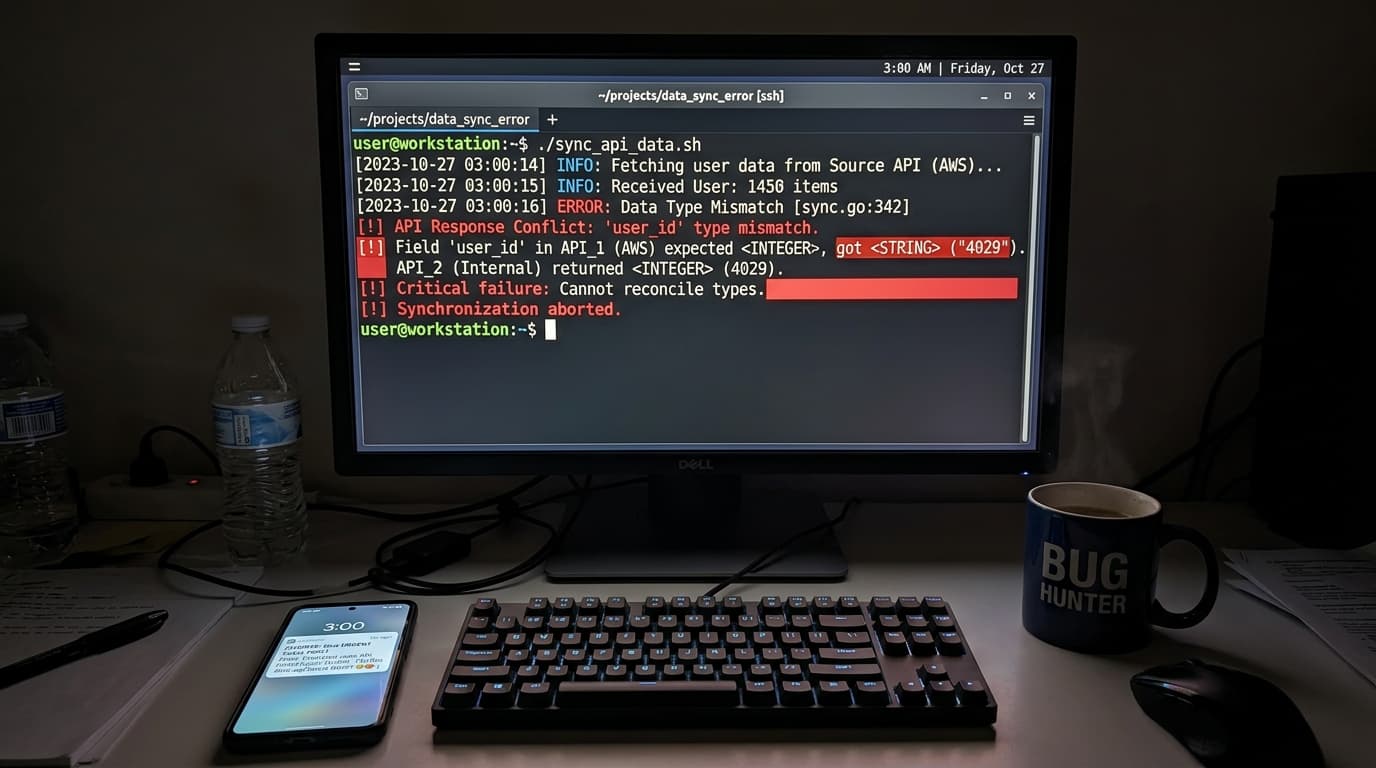
Your AI agent just failed silently at 3 AM because two tools returned the same field name with different data types, and nobody caught it until a customer complained.
This isn't a story about bad engineering. It's what happens when you replace a monolithic CRM with six specialized agents, each calling different APIs, each maintaining its own state, each with its own idea of what "contact_id" means.
The promise of AI agents is real: instead of wrestling with Salesforce's 47-step workflow builder, you write natural language instructions and the agent figures it out. Instead of paying for enterprise seats you don't use, you compose lightweight tools that do exactly what you need. The economics are compelling. The developer experience is better. The flexibility is unmatched.
But there's a complexity tax nobody talks about.
The Coordination Problem
Monolithic SaaS platforms are bloated and expensive, but they solve one problem extremely well: everything lives in the same database. When your sales rep updates a deal stage in Salesforce, the reporting dashboard, the email sequences, and the commission calculator all see the same truth immediately.
Agent-based architectures trade that guaranteed consistency for flexibility. Now you have:
- A lead enrichment agent pulling from Clearbit
- A qualification agent scoring based on your ICP criteria
- A CRM sync agent writing to your database
- A notification agent posting to Slack
- An analytics agent aggregating metrics
Each agent is simple. The system is not.
The failure modes multiply. The enrichment agent runs but returns partial data. The qualification agent times out and retries with stale context. The CRM sync agent writes successfully but the notification agent never fires because it was listening for a different event shape. Your Slack channel stays quiet. Your pipeline report shows a lead that doesn't exist. Nobody notices until Friday.
This isn't hypothetical. This is the pattern we see in every multi-agent system that scales past the demo phase.
State Is the Hard Part
The dirtiest secret in AI automation: most agent failures aren't LLM hallucinations. They're state management bugs.
When you build with agents, you're building a distributed system. Distributed systems have two hard problems: consensus and state synchronization. Your agents need to agree on what happened, in what order, and what that means for the next action.
Consider a customer support workflow:
- User submits ticket via email
- Triage agent categorizes it (bug, feature request, billing)
- Routing agent assigns to the right team
- Context agent pulls user history and recent interactions
- Response agent drafts a reply
- Approval agent checks for policy violations
- Send agent delivers the response and updates ticket status
What happens when the context agent is slow and the response agent starts drafting without full history? What happens when the user sends a follow-up email while the approval agent is still processing? What happens when two agents try to update the ticket status simultaneously?
You need:
- Event ordering guarantees
- Idempotency keys
- Conflict resolution strategies
- Retry logic with exponential backoff
- Dead letter queues for poison messages
- Observable state transitions
None of this is AI-specific. It's distributed systems engineering. But most teams building AI agents are optimizing prompts, not designing state machines.
The Observability Gap
When your Zapier automation breaks, you get an email. When your AI agent fails, you often get nothing.
Agents fail gracefully. They hallucinate plausible-sounding outputs. They skip steps without throwing errors. They make reasonable-seeming decisions based on incomplete information. The system keeps running. The data slowly drifts from reality.
Traditional monitoring doesn't catch this. Your healthcheck endpoint returns 200. Your error rate is zero. Your latency is fine. But your agent just confidently told a customer their refund was processed when it wasn't, because the payment API returned a 202 (accepted) instead of a 200 (completed) and the agent interpreted "accepted" as "done."
You need:
- Semantic monitoring (did the agent do what it was supposed to do, not just run without errors)
- Assertion-based testing (explicit checks for expected outcomes, not just happy-path coverage)
- Human-in-the-loop checkpoints for high-stakes decisions
- Audit trails that show not just what happened, but why the agent decided to do it
This is expensive. Not in compute costs—in engineering time and ongoing maintenance.
The Mitigation Strategy
None of this means you shouldn't build with agents. It means you should build with your eyes open.
The teams that succeed with agent-based architectures share three patterns:
1. They start with clear contracts between agents.
Every agent has a defined input schema, output schema, and failure mode. When Agent A hands off to Agent B, both sides know exactly what to expect. This sounds obvious. Most teams skip it because "the LLM will figure it out." The LLM will not figure it out.
2. They instrument everything.
Not just logs. Structured events that capture: what the agent was asked to do, what context it had, what decision it made, what action it took, and what the outcome was. When something breaks (and it will), you need to replay the agent's reasoning, not just read a stack trace.
3. They limit agent autonomy to match their observability.
If you can't monitor it, don't automate it. High-stakes workflows get human checkpoints. Low-stakes workflows get full automation. The line between high and low stakes is defined by impact (what breaks if this fails) and detectability (how quickly you'll notice).
The studio model matters here. You don't need a full-time SRE to instrument your agent architecture. You need someone who's built enough of these systems to know where the failure modes hide, who can set up the right observability from day one, and who can move on once the foundation is solid.
The Real Complexity Budget
Every architecture has a complexity budget. Monolithic SaaS spends it on vendor lock-in, feature bloat, and per-seat pricing that doesn't scale with value. Agent-based architectures spend it on coordination, state management, and observability.
The question isn't which is simpler. The question is which complexity you'd rather manage.
For teams building differentiated workflows—where the competitive advantage comes from doing things differently, not just doing things—the agent model wins. You get flexibility, composability, and economics that actually make sense.
But only if you treat it like the distributed system it is.
Most teams don't. They treat agents like better API wrappers. They optimize prompts when they should be designing state machines. They celebrate the demo and ignore the failure modes.
Then they hit scale and realize their automation stack is more fragile than the manual process it replaced.
The fix isn't to go back to monolithic SaaS. It's to build agent architectures with the same rigor you'd apply to any distributed system: clear contracts, comprehensive instrumentation, and deliberate constraints on autonomy.
This is engineering work, not prompt work. If your AI automation strategy doesn't include a plan for state management and observability, you're not building automation. You're building technical debt with a chat interface.