
Voice AI Infrastructure Unbundling: The Platform Tax Is Coming Due
By Luke Ribeiro
Overview
Overview
The voice AI stack is fragmenting as enterprises move past all-in-one platforms toward modular, API-first architectures. Deepgram's aggressive positioning across 30+ content pieces signals both market
Voice AI has crossed the demo threshold. What we're seeing now is the infrastructure war that follows every platform transition: the unbundling of monolithic solutions into composable primitives, and the race to own the orchestration layer where real economics live.
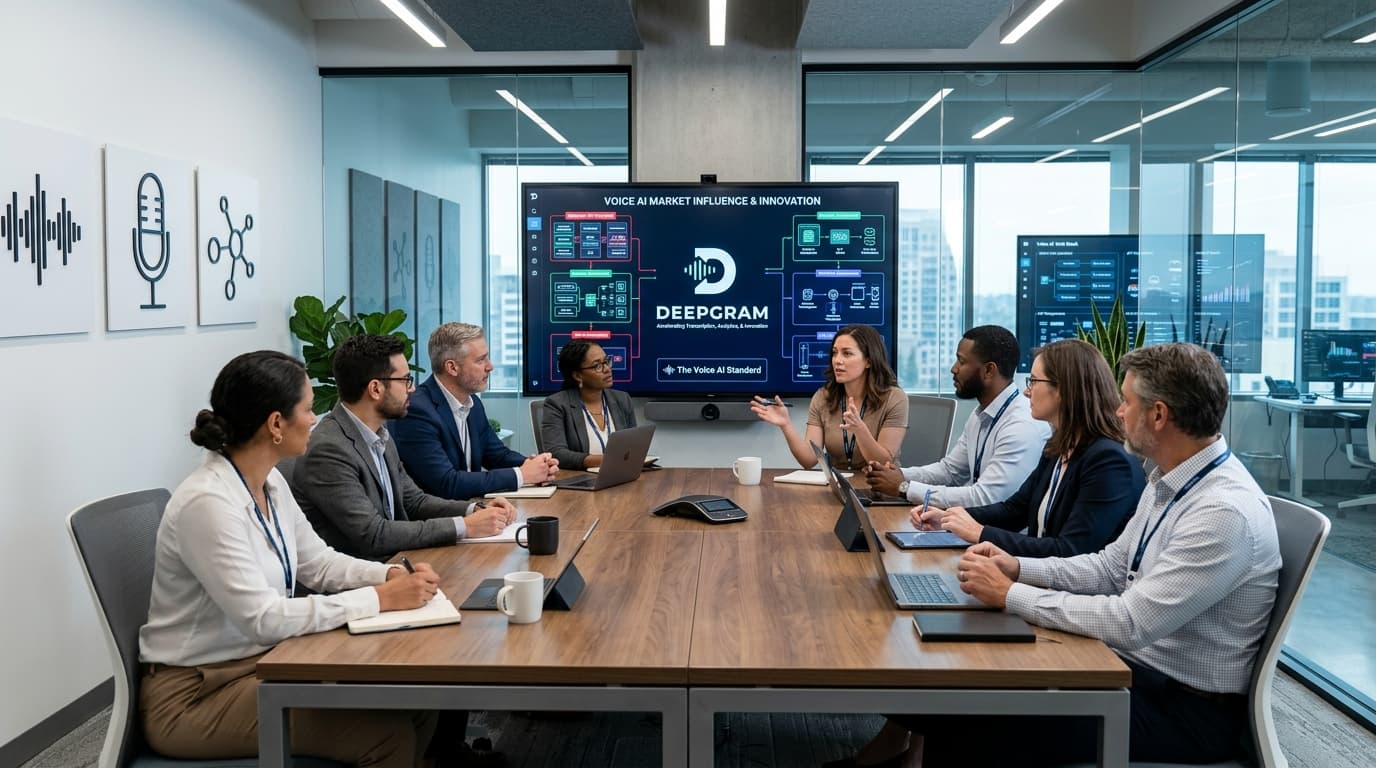
Deepgram is flooding the zone with technical content that does two things simultaneously. First, it educates buyers on why all-in-one voice agent platforms extract hidden margin through LLM pass-through, TTS markup, and telephony bundling—what they're calling the 'platform tax.' Second, it positions modular API stacks as the inevitable architecture for anyone operating at scale or under regulatory constraint. This isn't just marketing. It reflects a genuine shift in how enterprises are buying voice infrastructure. Early adopters who built on turnkey platforms are now hitting cost walls, latency ceilings, or compliance gaps that force them to decouple. The content is a mirror of deal cycles Deepgram is already seeing.
The strategic signal here is about where value accrues. In the short term, the land grab is for API volume—hence the tripling of default concurrency limits and the acquisition of Of.One to expand ecosystem reach. But the real prize is the orchestration layer: the logic that routes between STT, TTS, LLM, and telephony providers based on cost, latency, and compliance requirements. Deepgram is positioning itself not just as an ASR vendor, but as the intelligence layer that helps enterprises navigate a fragmented stack. That's where margin lives once commodity pricing hits the model layer.
For AI-native operators, the implications are tactical. If you're building voice products, the build-versus-buy calculus has shifted. Managed platforms still make sense for MVPs and low-volume use cases, but the cost curve inverts quickly. The content makes clear that anyone projecting beyond pilot volume needs to model costs at target scale, not current usage—and that means understanding per-minute pricing across STT, TTS, LLM inference, and telephony separately. The other implication is defensive: if you're a workflow automation platform or a vertical SaaS product, voice is no longer a feature you can defer. It's becoming table stakes, and the window to build or partner is narrowing as specialist vendors like Deepgram lock in integrations and mindshare.
The risk vector is over-rotation. Deepgram's content blitz is effective precisely because it's grounded in real production problems—latency budgets, accent variability, audio quality cascades. But the sheer volume of similar framing across 30 pieces also suggests a market that's still earlier than the urgency implies. Not every business needs sub-300ms latency or ten-language support. The danger for operators is mistaking infrastructure readiness for market readiness, and over-engineering for scale that hasn't arrived.
What to watch: whether enterprises actually unbundle at the rate Deepgram is betting on, or whether platform convenience and single-vendor accountability keep most buyers locked in longer than the API-first narrative suggests. The other leading indicator is whether competitors respond by open-sourcing orchestration tooling or doubling down on vertical integration. If orchestration commoditizes quickly, the margin thesis breaks. If it stays proprietary and complex, Deepgram's positioning pays off.